About
One builder. You talk to the person who writes it.
This is a studio of one. The person who takes your call is the person who writes your software, sits beside you at handover, and picks up the phone eighteen months later. There is nobody here to hand you to, which is the whole point rather than a limitation we are hoping you will not notice.
A first call is thirty minutes and free. Nothing is charged before you have the price in writing.
The businesses we build for have almost nothing in common. A home builder chasing three quotes on one job. A boutique with a fitting room diary. A consultancy producing the reports other businesses put in front of their board. What they share is a spreadsheet holding the place together and one person who understands it.
Who this tends to be for
[ 01 ] Who you are dealing with
A name, a place, and one pair of hands.
[ ]
Diana
Builder
- Alberta, Canada
- One person. No staff, no subcontractors.
- hello@runsolostack.com
- We reply within two business days.
We have spent years inside small businesses that were held together by spreadsheets, paper, and one person keeping the rest of it in their head. That is why the worst part of your week is the first thing we ask about, and why we usually recognise it before you have finished describing it.
Every business we have built for so far has had the same shape of problem. Something specific that no ready-made tool did exactly right. An owner who knew perfectly well what good looked like but could not build it. And nothing available in between a spreadsheet and a very large invoice from somebody who had never met them. So we build the missing piece, agree the price before starting, and leave you owning it.
We take on a small number of jobs at a time, deliberately. It is the only way one person finishes anything, and finished is the part everybody else is bad at.
The honest version
[ 02 ] Why one person
An agency sells you a team. What you get is whoever is free.
An agency
You meet a salesperson, you are handed an account manager, and the work is done by whoever has a gap in their week. Every hand-off loses something, and you pay for all three people. Right for a large job with a committee behind it. Expensive for a small one.
Your own developer
The right move once the software is the business. Below that you are paying a salary to keep somebody busy, and most small businesses do not have enough work to fill one person for a year.
One experienced person
Takes the call, writes the software, and is still there eighteen months later. Better at small, well defined and finished. Worse at large, sprawling and open ended, which is why we say so on the first call instead of taking the job.
[ this is the one you are reading about ]
It is not better than an agency at everything. It is better at small, well defined and finished, which happens to be what a business under fifty people almost always needs.
[ 03 ] What is already built
The depth is in the parts nobody puts in a demo.
See the work in full →24
forms
job site forms running on one engine, so your twenty fifth is an afternoon of work rather than a project
22
lesson layouts
ways to lay out a training lesson, every one of them usable from a keyboard
13
stops
physical stops on a site walk, ordered by where you are standing rather than by reference number
9
tools
calculators and quizzes live on business websites, answering a real question and collecting the enquiry
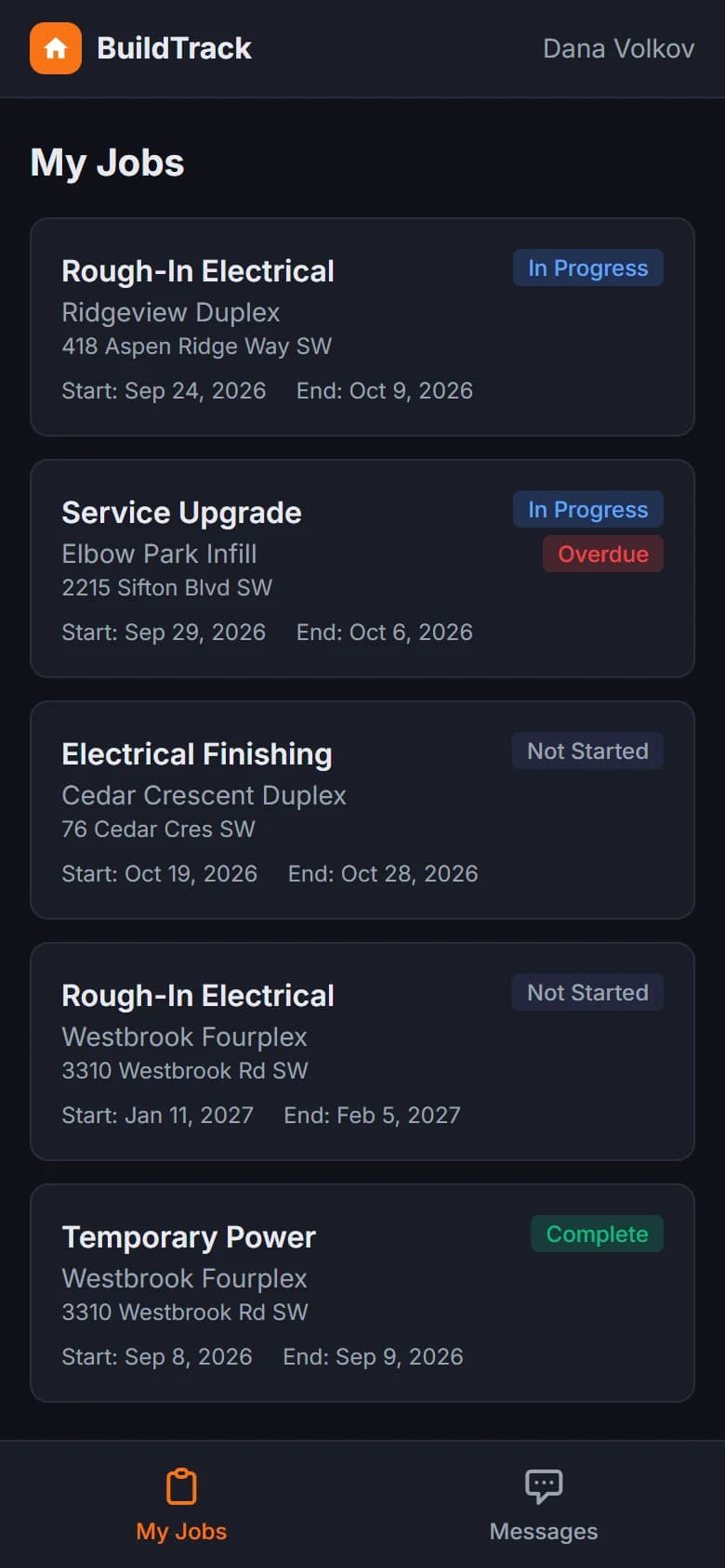
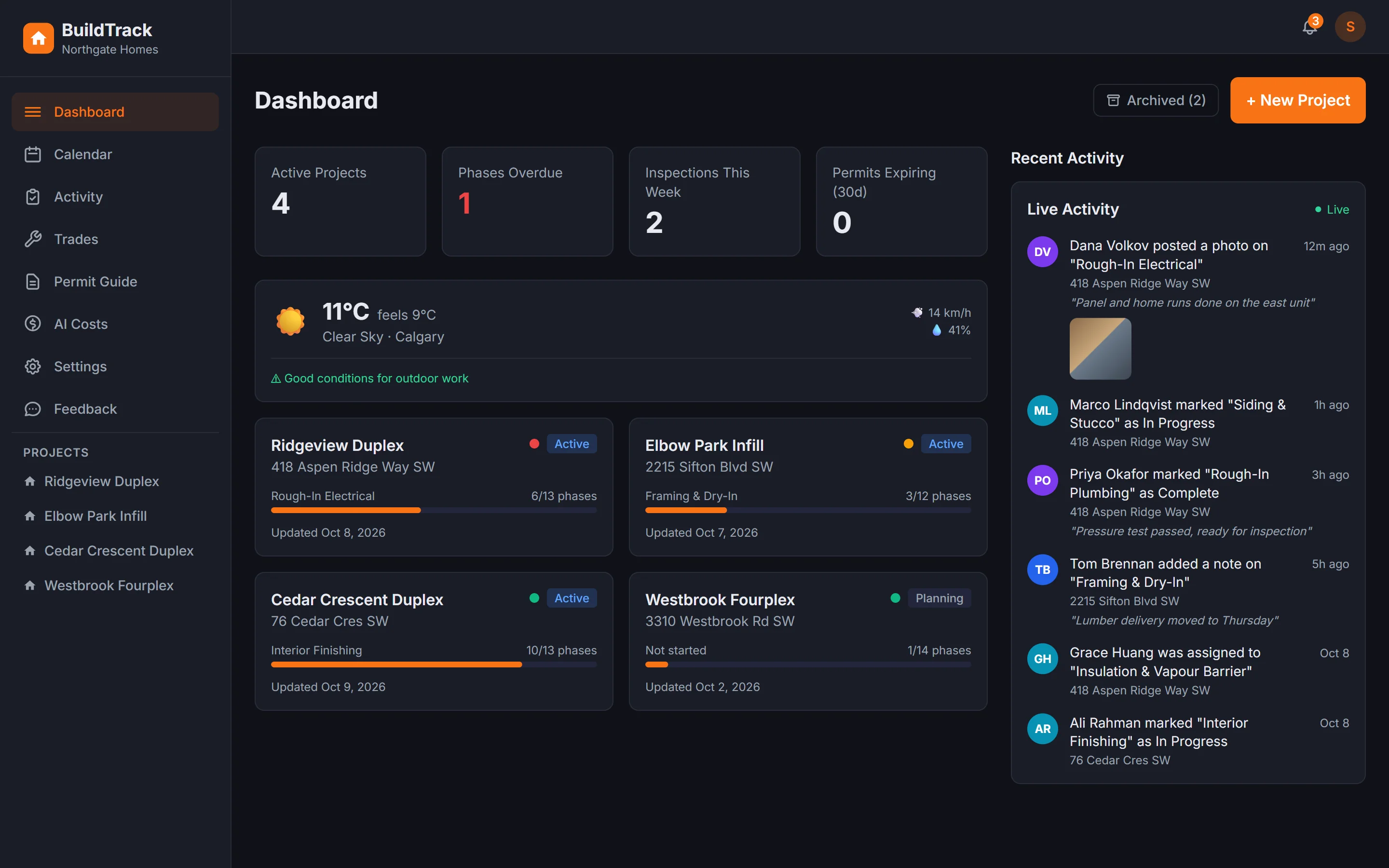
And the range, shown rather than claimed. Four trades, four completely different jobs, all of them built by the same pair of hands.
Home building
Three quotes, priced like for like
Three suppliers price the same job three different ways. One screen re-prices them like for like.
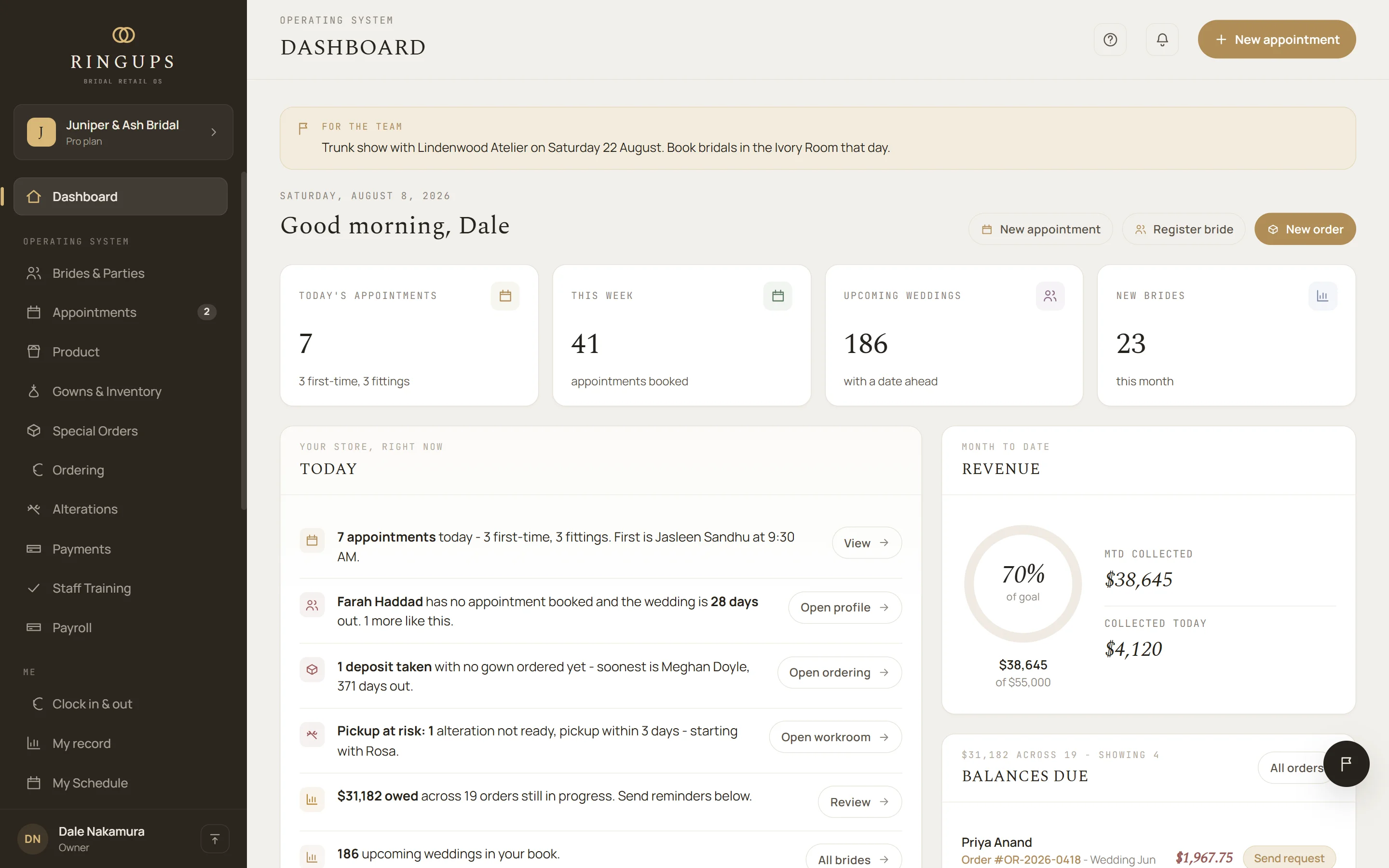
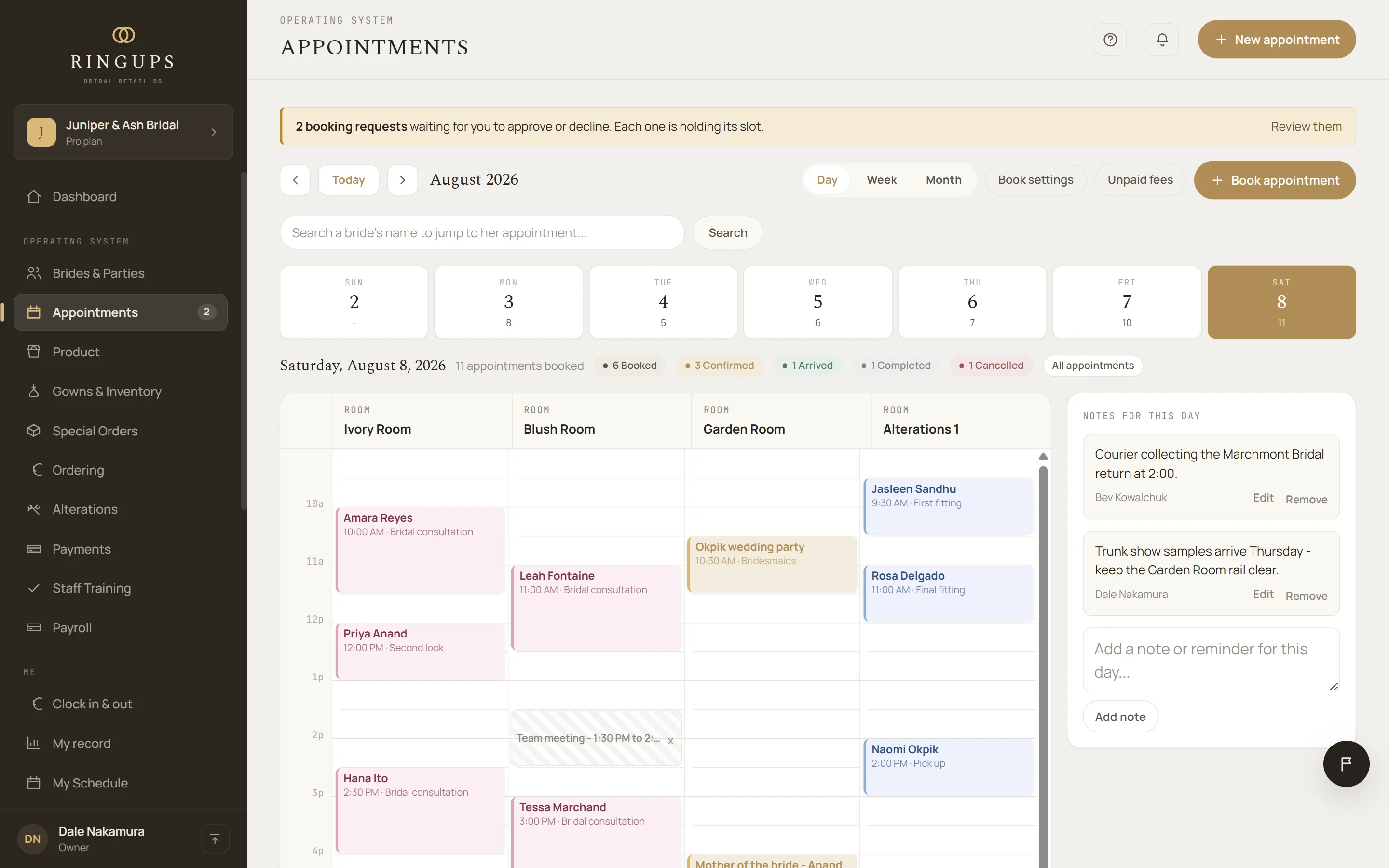
Retail and appointments
A boutique's Monday, by fitting room
A shop day drawn to the minute, one column per fitting room, with a booking fee taken by card that comes off what she buys.
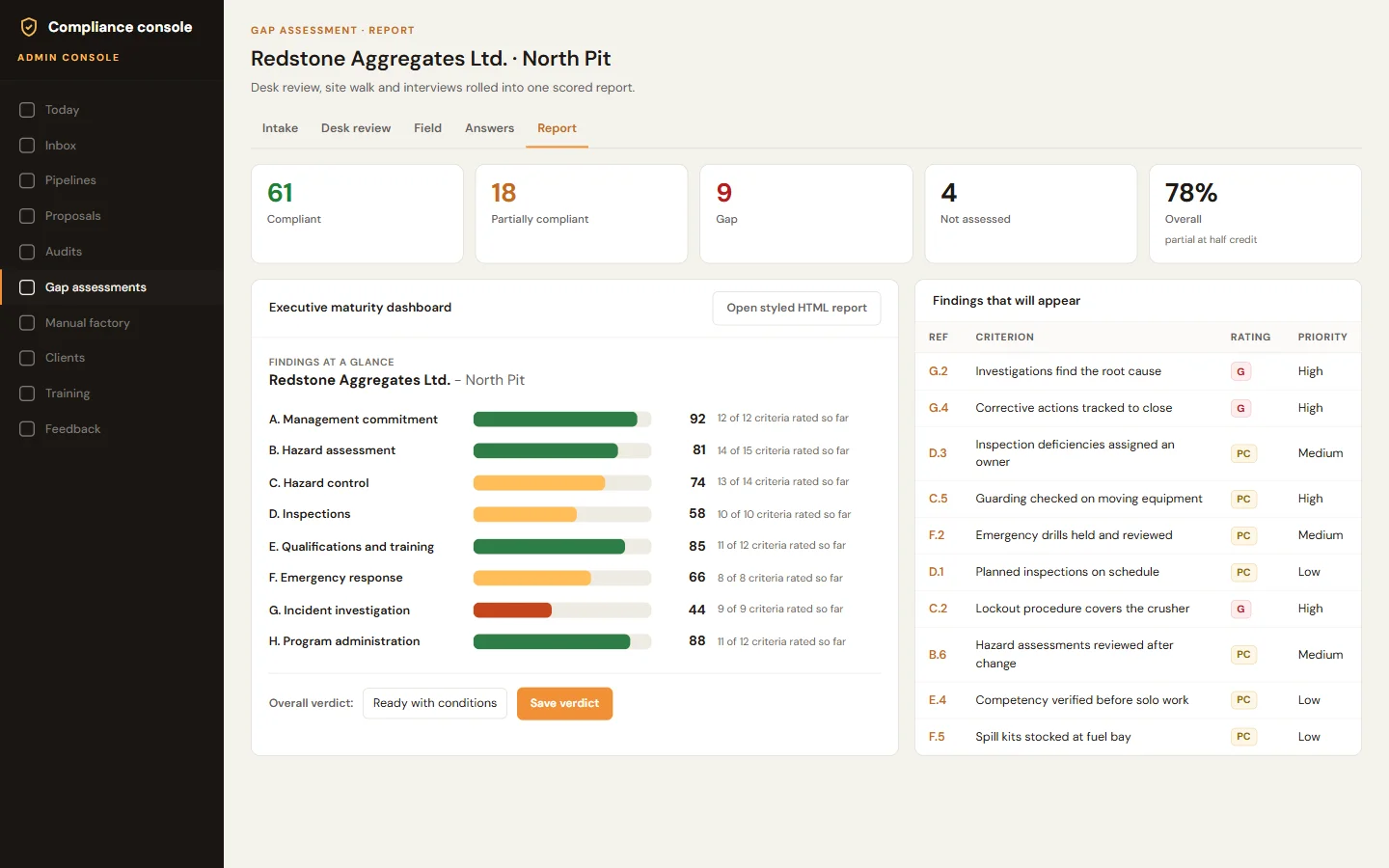
Safety and compliance
A safety assessment, printed for the board
A scored assessment that comes out as the document a client puts in front of their board.
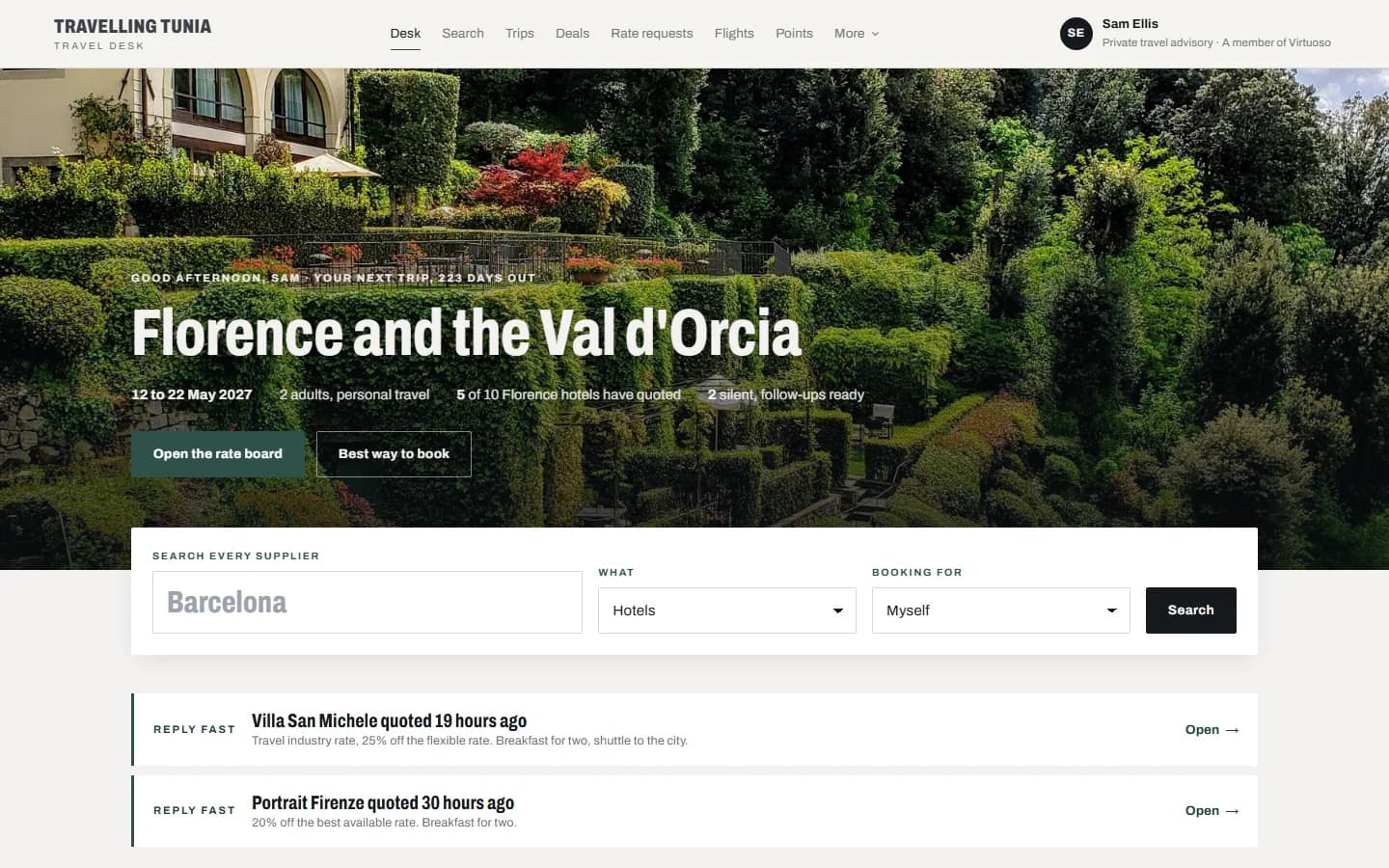
Travel
A travel agent's Monday
What needs an agent this week, what is departing, and how long there is to sort it. Being built now, screens first.
Every name, figure and date on these screens is invented. The layout is exactly what the software does.
[ 04 ] How we work
Six things that do not change, whatever we are building.
The whole thing, week by week →The price is agreed in writing first
Before anything is built you get a document saying exactly what it will do, what it will not do, and what it costs. Nothing starts until you have read it and said yes. If you ask for something that was not in it, we price that on its own and you decide before it is built.
You see working software, not drawings
At every stage you get something you can open on your own phone and use. We do not show you a picture of a screen and call it progress, and we do not fill it with made up information to make it look finished.
Nobody disappears after launch
A monthly fee keeps it running, patched and changing as you need. Something breaking six months later is not a new job, it is part of the arrangement, and there is a button on every screen for reporting it.
You talk to the person who built it
No ticket number, no account manager, no forty eight hour window before a human reads it. Questions get real answers, from the person whose hands were on the thing you are asking about.
We say no when it is a no
Wrong size, wrong timing, wrong kind of problem. We say that on the first call rather than letting it go quietly badly for six months and then handing you an invoice for it.
It is yours from the first day
Your software is kept in a private locker that you hold the keys to, not us. Every change is saved and dated. You can hand the whole thing to any other developer at any time, and there is nothing to pay to leave.
[ 05 ] Said out loud
The two lists most studios leave off their about page.
What we will not do
We will not take a job we cannot finish.
We will not hand you to somebody else halfway through.
We will not sell you a monthly fee for something that should be a one off.
We will not build you something you could buy off a shelf for forty dollars a month. When that is the answer we say it, and you will not have paid us anything.
We will not put a real client name, figure or record on this website, in a screen, or in a sales call. Every screen you see here is invented.
What we have not built
Three things people assume are included. They are not, and here is exactly where each one stands.
Text messages
Built into two of the four, and switched on in one of them. In the other it is finished code waiting on an account that has never been opened, so no message has gone out from it. Assume texting is about a day of work on top of your build, plus a messaging account in your own name, unless we have told you otherwise in writing.
Posting to social platforms
Nothing goes out on its own. A finished month sits in a queue until a person approves it, an approved email arrives in your own mail tool as a draft for you to send, and an approved post only leaves at all if you have connected your own scheduling account. With nothing connected, you copy it and post it yourself.
A separate off-site backup
Wherever your records are kept, a copy is taken every night, which is what most small businesses run on. A second copy held somewhere else entirely is extra, and we will quote it rather than imply it is already there.
[ 06 ] Straight answers
The things people ask before they say yes.
What if you get hit by a bus.
Fair question, and the honest answer is that a studio of one has to plan for it rather than promise it will not happen.
Three things are true. Your software is kept in a private locker that you hold the keys to, not just us. It is built with ordinary, widely used tools, so any competent developer can open it and understand it, and it is written down in plain language for exactly that reason. And it keeps running whether we are here or not, because the thing keeping it online is a service in your own business name, not a person.
What that means practically: if we disappear, you are not stuck with something nobody else can touch. You are in the same position as any business whose developer moved on, which is inconvenient rather than fatal.
Why not just use Squarespace, or Shopify.
Often you should, and we will say so on the call. Those are very good at the thing they do, which is a website that looks professional without a developer. They stop being the right answer at a specific point: when the job you need doing is not a page, it is a process. Holding a deposit as money you owe until the customer collects. Chasing an order you placed with a supplier for a named bride. Working out which of three quotes is actually cheapest. That is usually the point at which people find us.
What if I want out.
Then you leave, and you take it with you. There is no exit fee and nothing to unpick, because it was yours from the first day rather than handed over at the end. Stop the monthly fee and the software does not switch off, you simply stop getting changes and support from us. The one honest caveat is that keeping it online, sending your email and taking card payments are ordinary monthly bills to those services. Those accounts are in your business name from the start, deliberately, so there is nothing of yours sitting in ours.
How do I know the price will not move.
Because the price is set after we have worked out what you need, not before. The first call is thirty minutes and free. After it you get a written note of exactly what will be built and a fixed price for it, and nothing starts until you have said yes. Half when we start, half when it goes live. If you ask for something later that was not in the note, we price it separately and you decide before it is built. What does not happen is an invoice for something you never agreed to.
I do not really know what I need.
That is the normal starting position and it is the easiest one to work with. You do not have to arrive with a specification. You need to be able to describe the part of your week that is worst: what you do twice, what you keep in your head, what you dread on a Monday. Working out what should be built from that is the job, and it is the part we are good at.
Is this just a computer writing my software.
A computer helps, the way a joiner uses a nail gun. It does not decide what to build, it does not talk to you, and nothing it produces reaches your business without a person reading it first. Where you see it inside the software itself it is always writing a first draft that a person then checks, and it is built to refuse rather than guess. If it cannot point at the line in your own document that a statement came from, it hands that item to a person instead of inventing an answer.
Why is this dearer than the quote I got from overseas.
Usually because that quote is for building it once, and this price is for having it work. The cheap version is real and sometimes it is fine. What it tends not to include is the awkward half: the tax working out to the exact cent, the date that shows a day early after three in the afternoon, the photo that never left the phone, the deposit that got counted as income. Those are the parts that cost you money quietly, months later.
Something here we have not answered? Ask us directly. It comes to one inbox and one person reads it.
Start here
Tell us the part of your week you dread.
You do not need a specification, a budget worked out, or the right words for it. Describe what goes wrong and we will tell you honestly whether it is worth building, whether you should buy something instead, and what it would cost either way.
Or write to hello@runsolostack.com. We reply within two business days.