Every supplier, every quote and every trip, on one desk.
A travel advisor prices the same hotel through wholesalers, agent sites, a consortium and the hotel itself, then chases quotes by email for months. Travelling Tunia puts the search, the rate requests and every trip on one desk, and gives each traveller a private trip page.
Travel. Built for a travel agency.
Every name, figure and date in these pictures is invented. The screens are the real software.
- booking channels compared side by side in one hotel search
- 6booking channels compared side by side in one hotel search
- private link per traveller, with no account to make
- 1private link per traveller, with no account to make
- emails sent without a person. Rate requests are drafted, never sent
- 0emails sent without a person. Rate requests are drafted, never sent
These describe the software. It has not launched yet.
The business
A boutique travel agency planning trips a year or more ahead. Finding the best way to book a hotel, and keeping track of every quote, takes longer than the booking itself.
Before
A tab for every supplier
The same hotel checked on one site after another, in different currencies.
Quotes lost in the inbox
Rate requests went out one email at a time, and the replies, declines and silences were tracked by memory.
Gaps found late
A trip with flights booked and two nights of hotel still open only showed up when someone went looking.
What we designed and built
One search for every supplier, one board for every trip.
- 1Search every supplier
- 2Ask hotels for rates
- 3Compare the quotes
- 4Best way to book
- 5Trip page to the traveller
Inside the software
What it does, on the real screens.
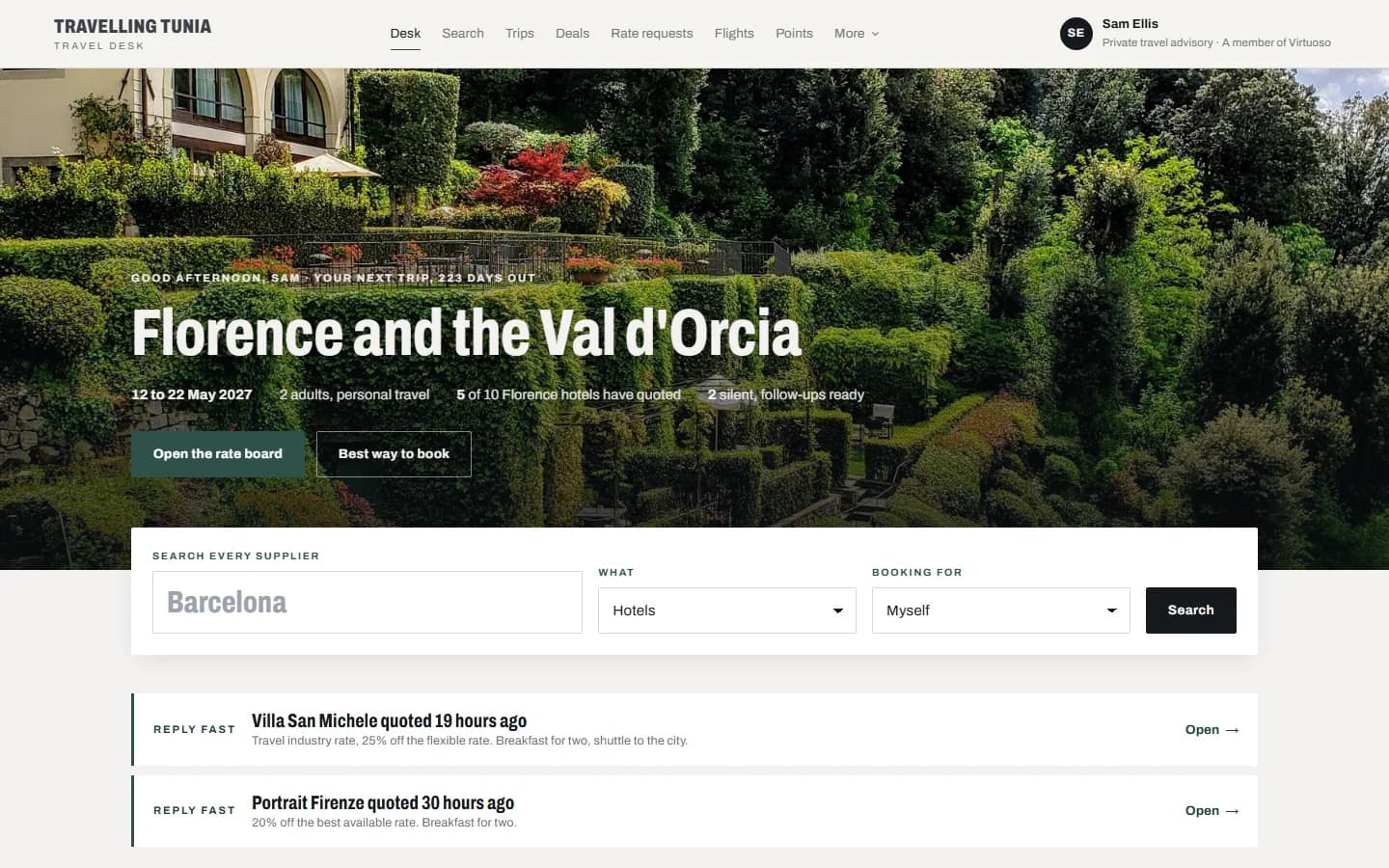
A desk that opens on today
The next trip and how far out it is, hotels that just quoted and need a fast reply, and a search box across every supplier.
- 1The next trip
- 2Search every supplier
- 3Quotes to answer fast
Every supplier in one search
One hotel search returns wholesale, agent site, consortium, brand and emailed agent rates side by side, converted to Canadian dollars, with the best value marked.
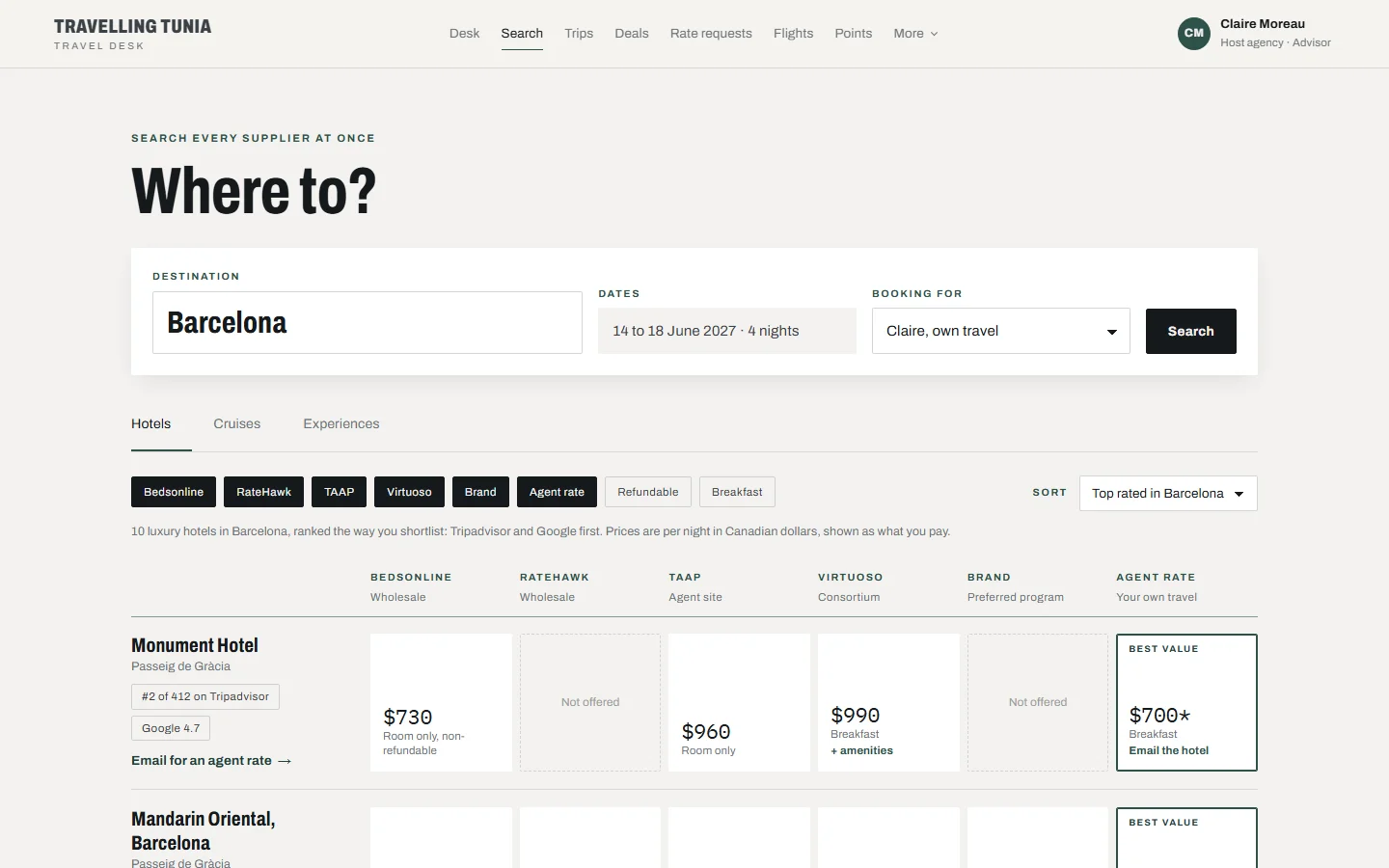
- 1Every channel side by side
- 2Best value marked
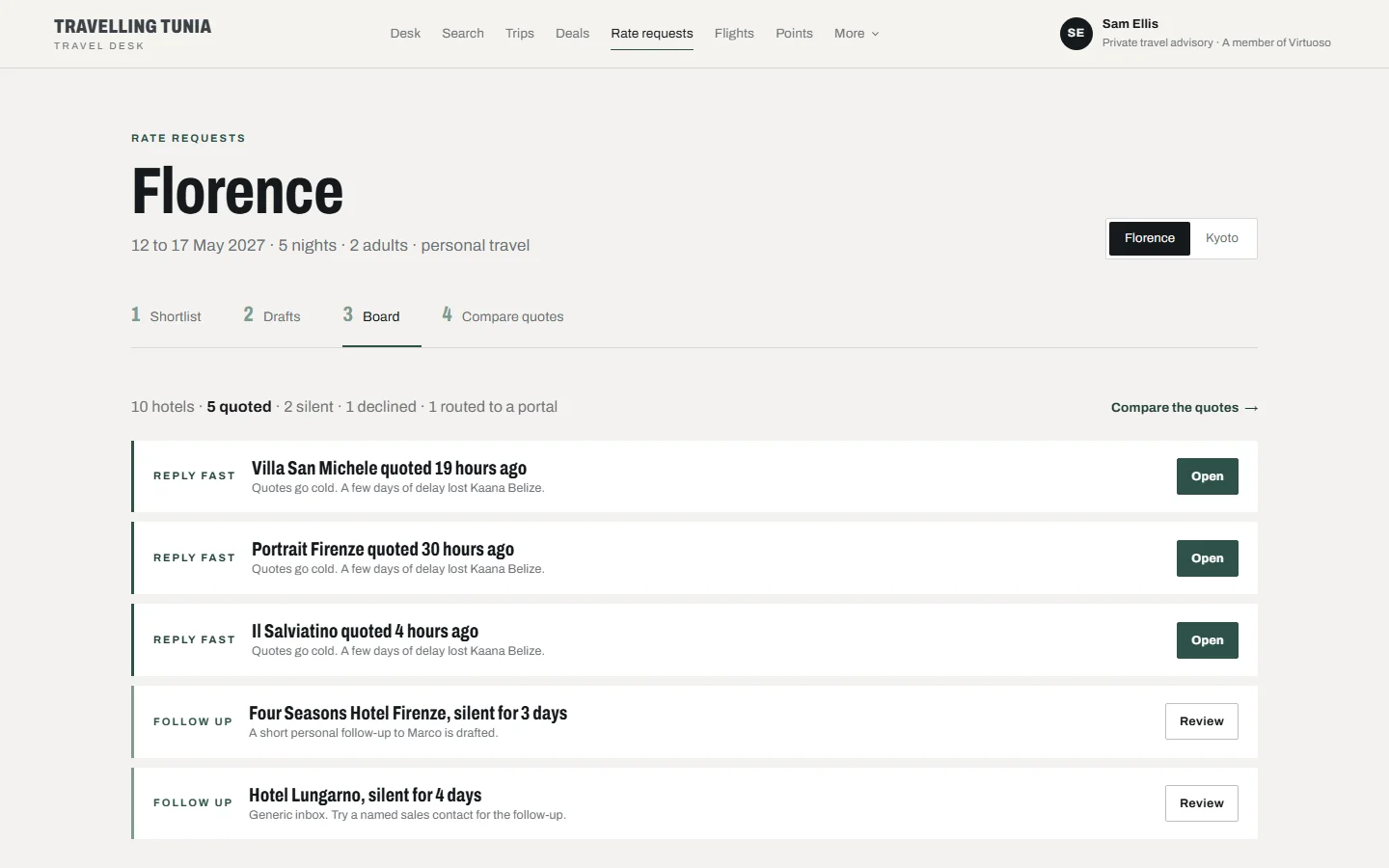
Rate requests that track themselves
Rate request emails to a shortlist of hotels are drafted into Gmail for her to send. Each reply is read and sorted into a nightly rate, a percentage off, a decline or a redirect, and follow-ups are drafted for the ones that went quiet.
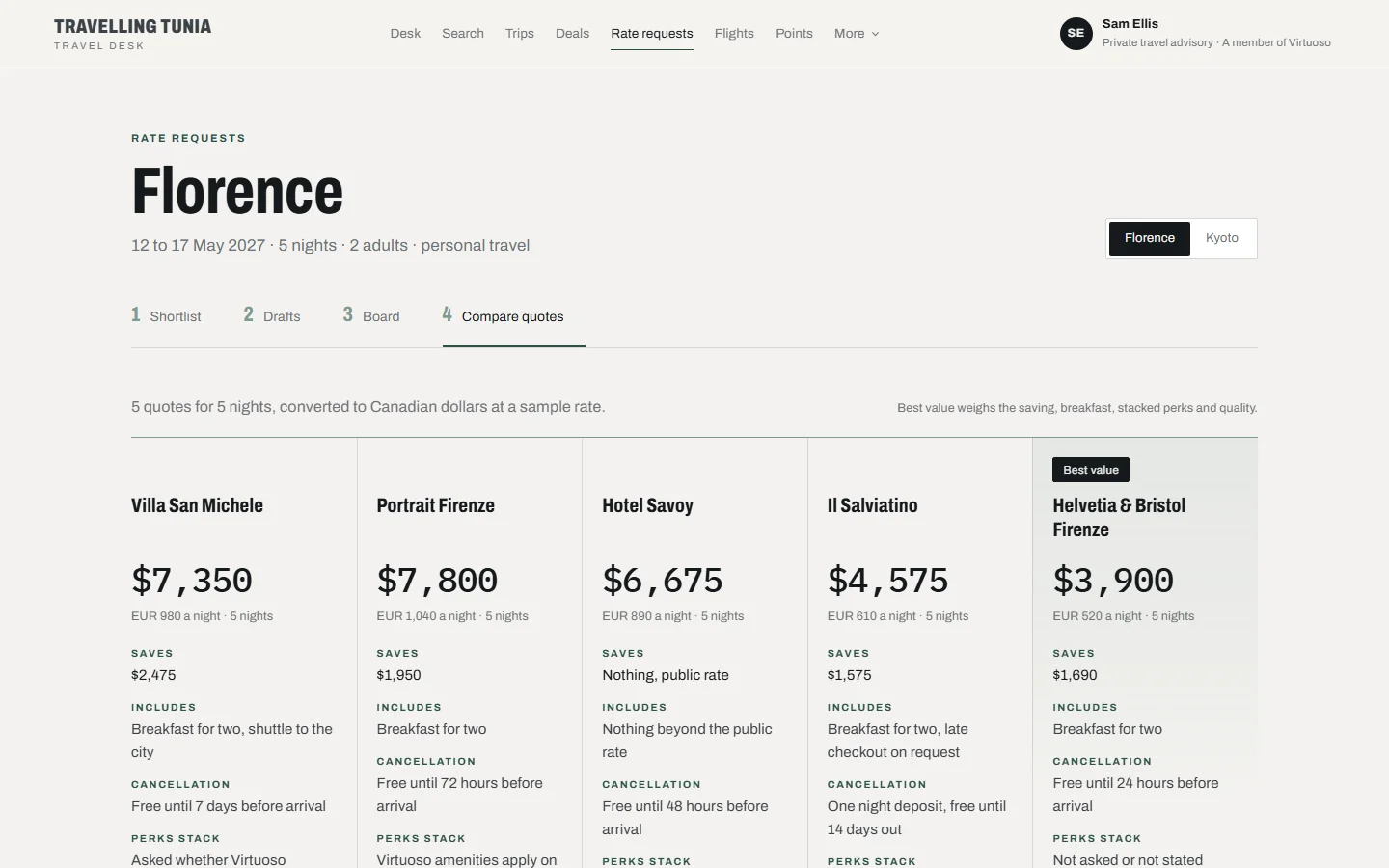
Quotes compared on one page
The saving, breakfast, cancellation terms and stacked perks for every quote, with the best value picked out.
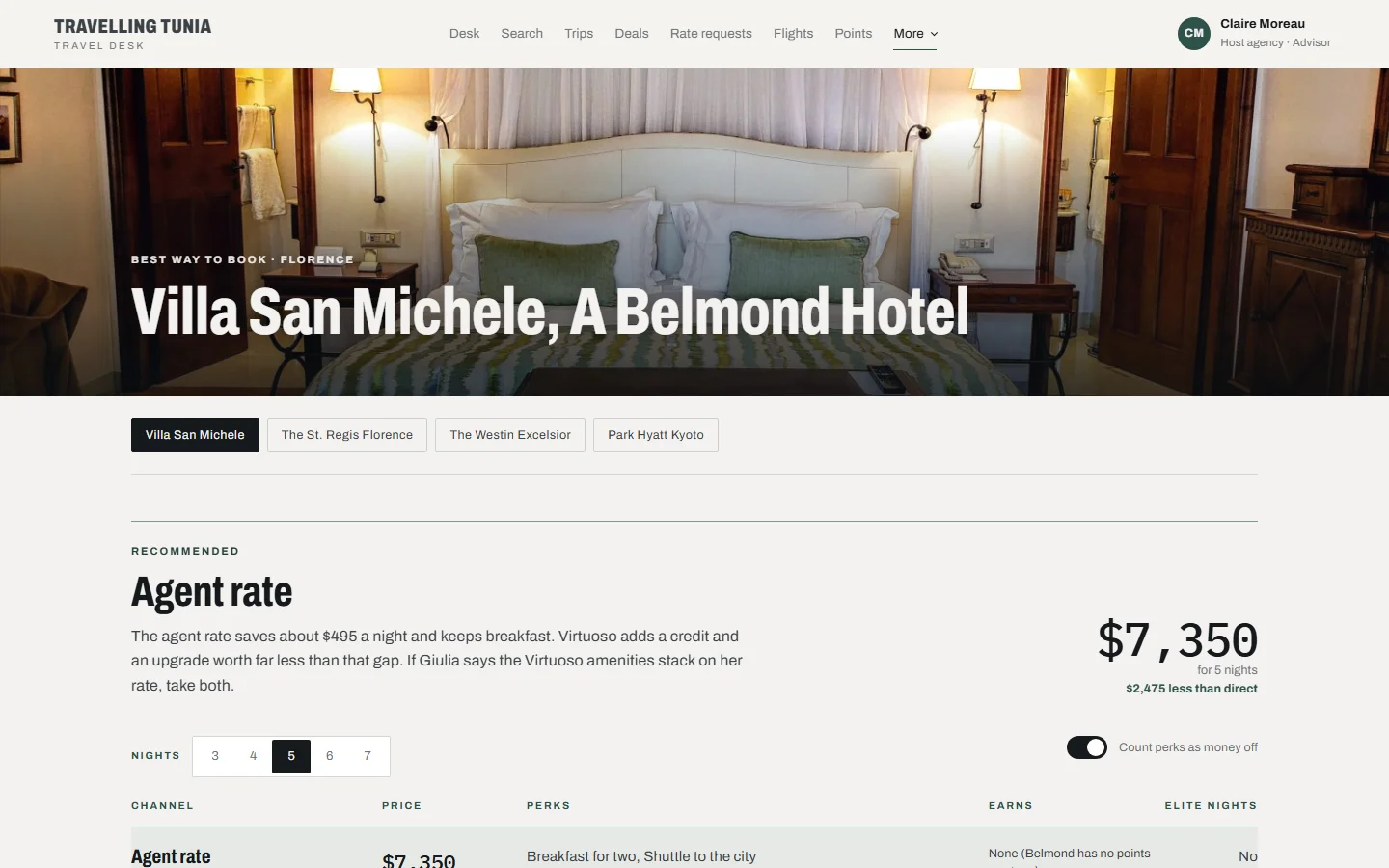
The best way to book one hotel
Every channel priced for the actual stay, with perks counted as money off.
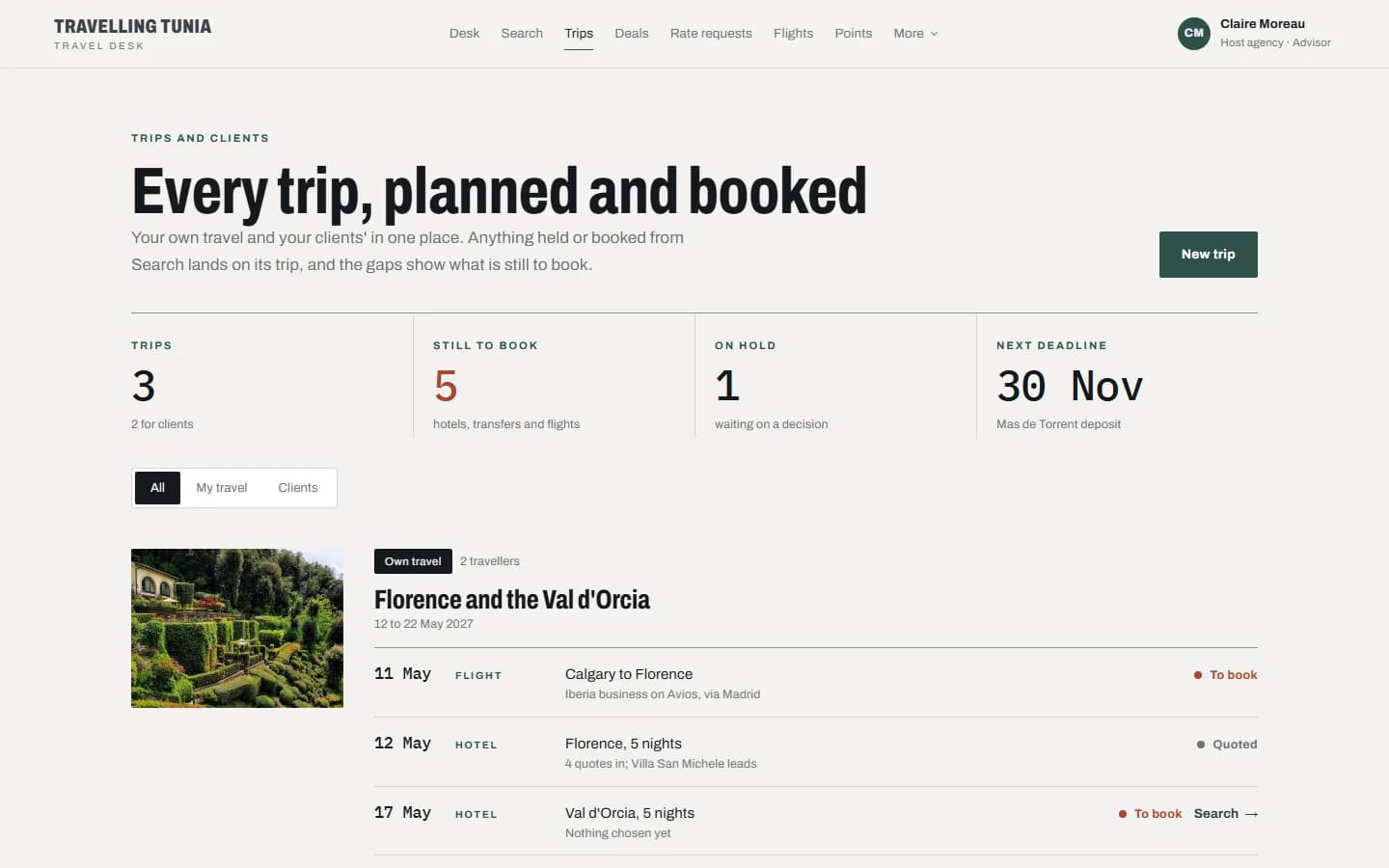
Every trip, and what is still to book
Each trip leg by leg, from flights to hotels, with what is booked, quoted and still open, and the next deposit deadline at the top.
On the phone
The desk goes where she goes.
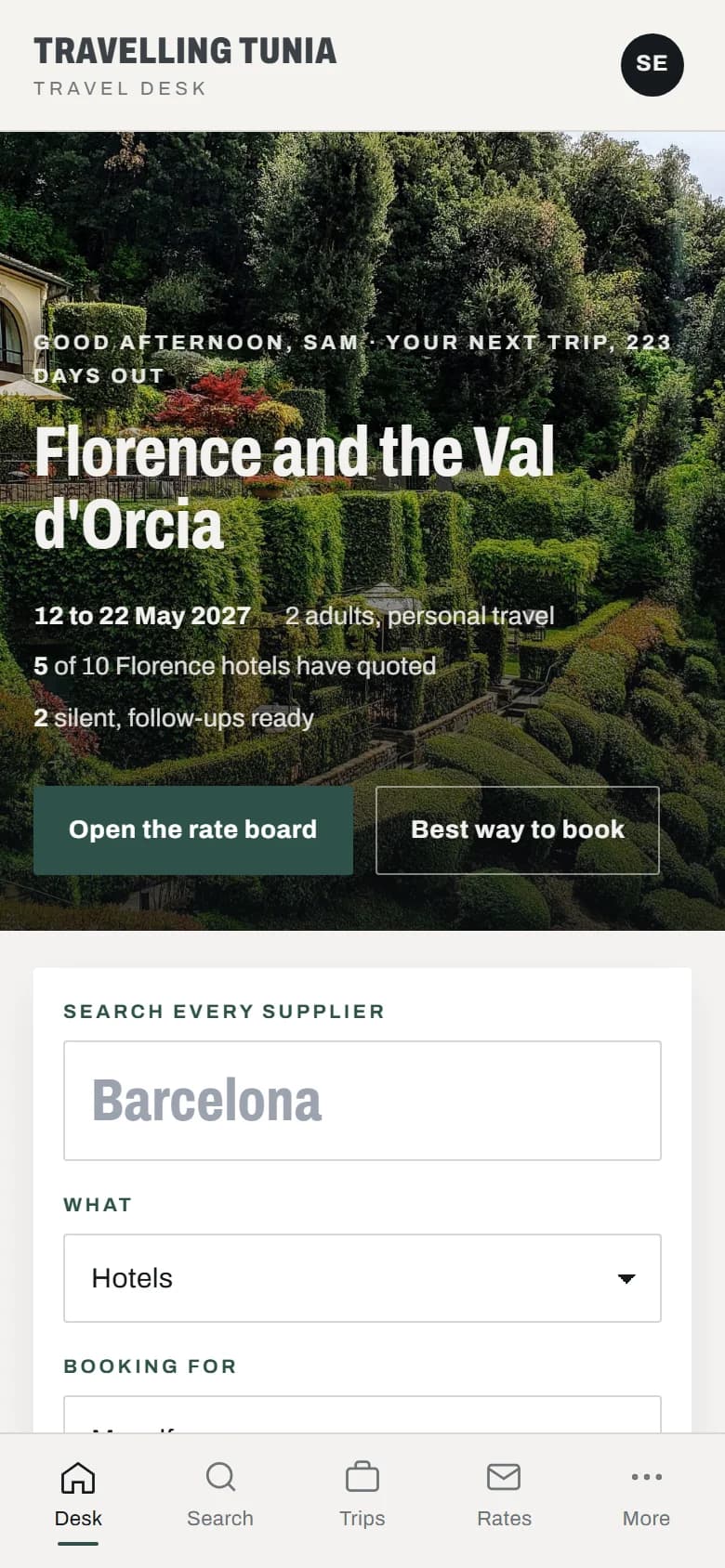
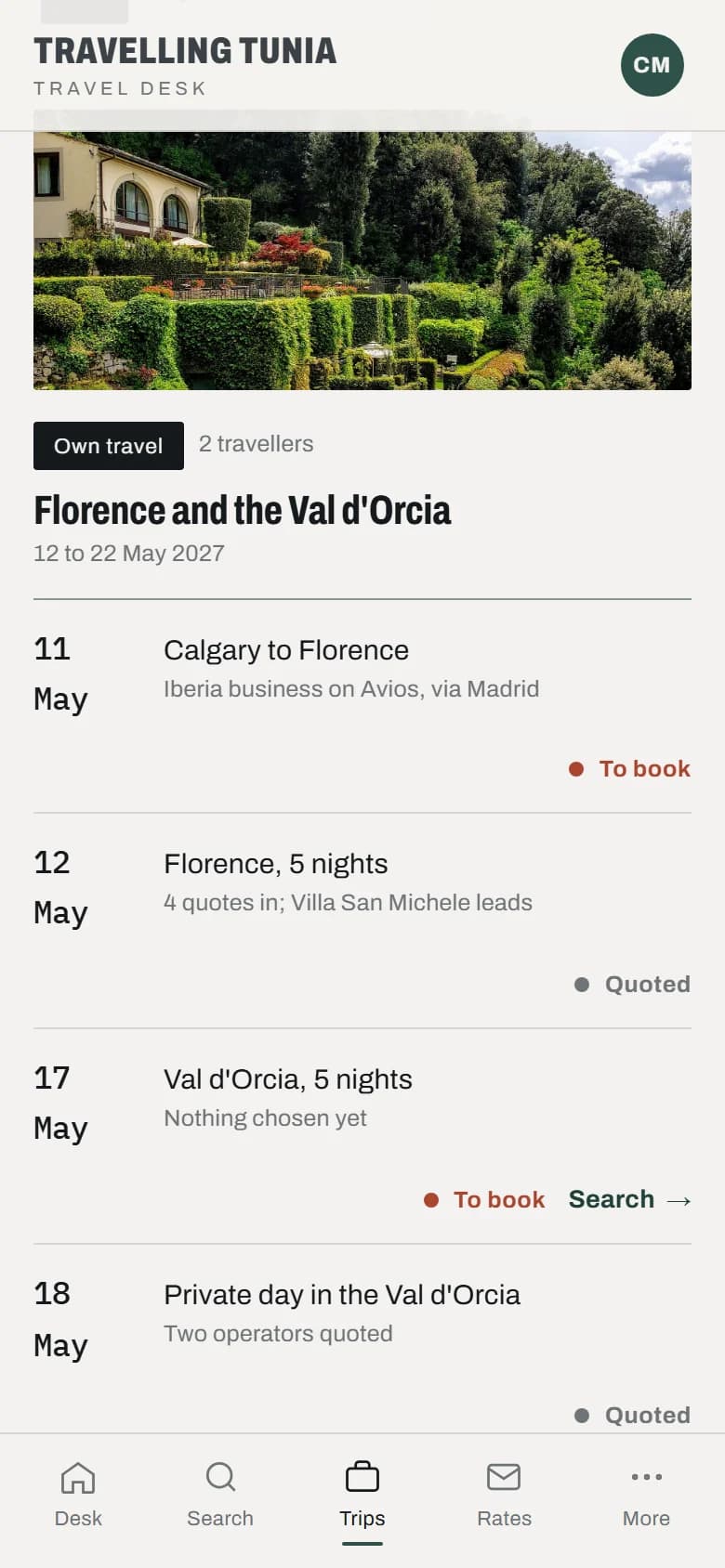
The same desk on a phone: the next trip and its status at a glance, and each trip leg by leg, with a bottom bar for the main sections.
- Next trip and status first
- Booked, quoted and still to book on every leg
What their customers see
A private trip page for every traveller.
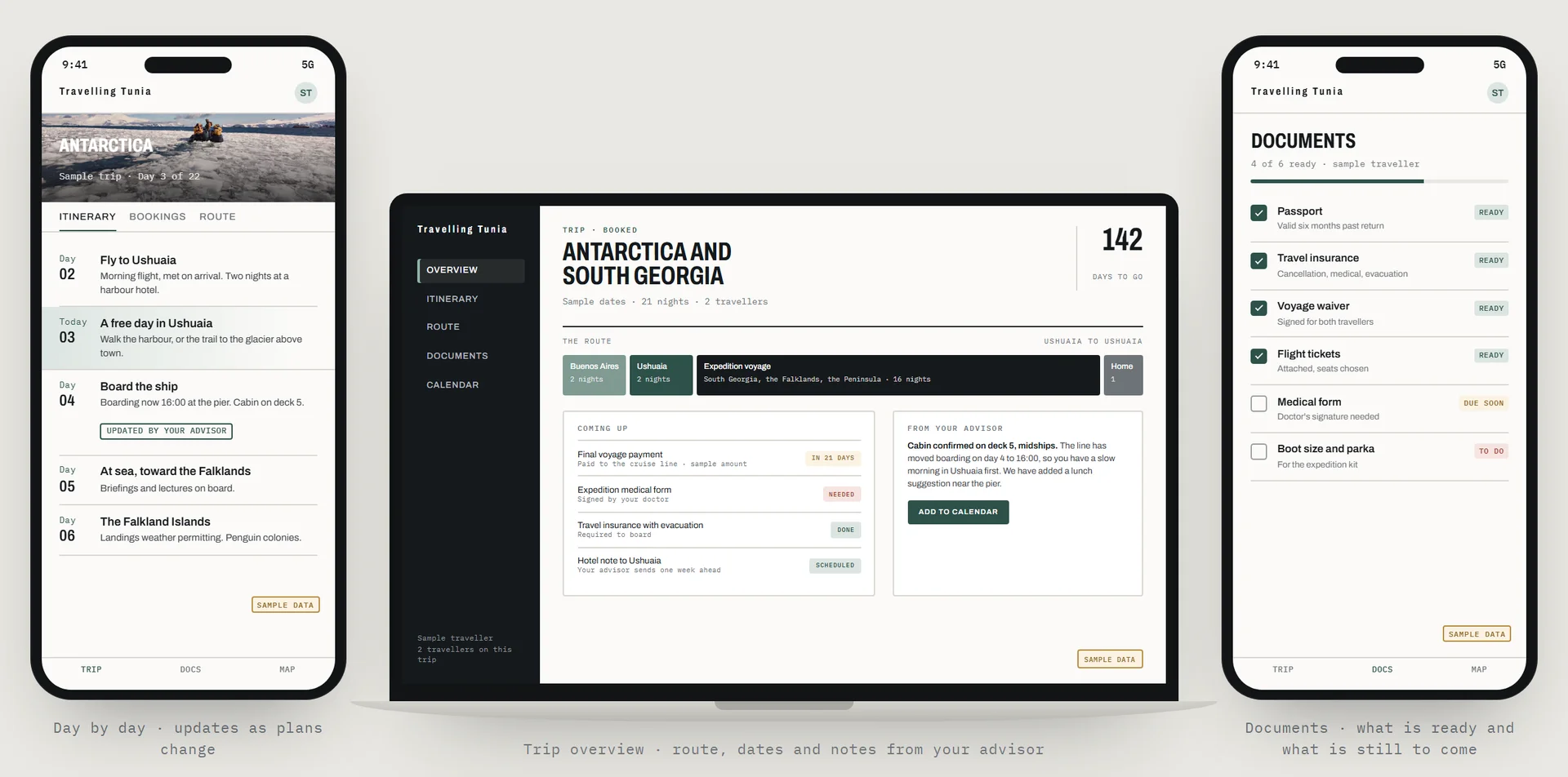
The result for the business
What changed day to day.
The best rate, not the first one
Every channel is checked in one search, and the emailed agent rate sits beside the rest.
Nothing goes quiet
Hotels that have not replied get a follow-up drafted, so a quote is never lost in the inbox.
Gaps show before they bite
Every trip shows what is still to book, so an open night is found months ahead.
One hotel, four ways to book it, per night
Room only, non-refundable
Room only
Breakfast and perks
Breakfast
More screens
More of the same system.
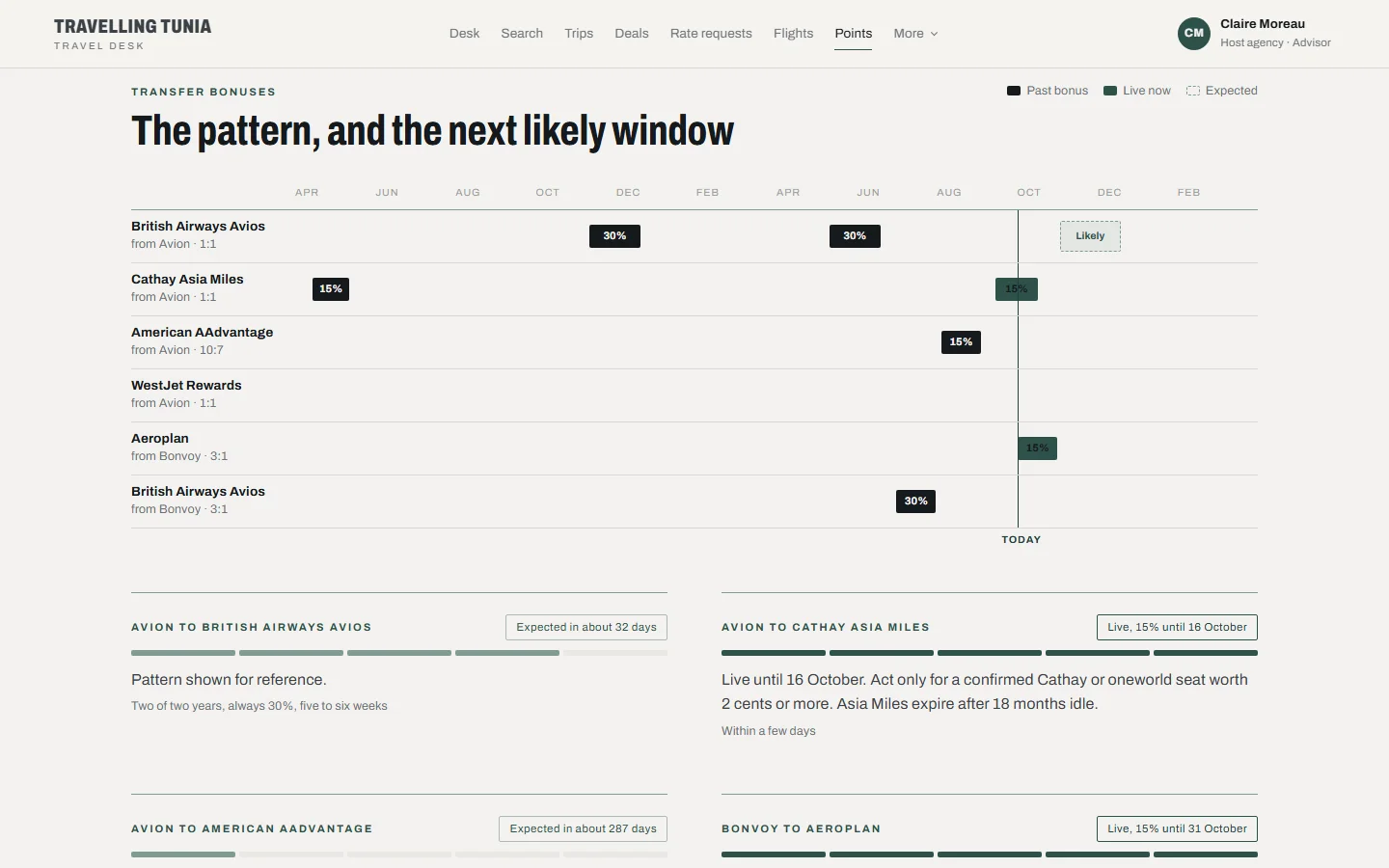
Where it is today
Travelling Tunia is in build and has not launched. The screens on this page are the real software running on the sample trips that ship with it. No real traveller is on them, and travellers' private details will stay behind a sign-in.
Honest limits
What it does not do
- Nothing books itself. Bookings are made with suppliers in the usual way.
- Rate request emails are drafts. Nothing sends without a person.
- It does not take payments from travellers. Money is handled with suppliers as it is today.
Ownership
What they own
- Theirs from the first day.It runs in accounts in their business's name, not ours.
- Their records come out whole.Everything can be downloaded in one go.
- Anyone can pick it up.Built with ordinary tools and written down in plain words.
Does your business work a bit like this?
Tell us the part of your week that is worst. The first call is thirty minutes and free, and you get a written price before anything starts.